|
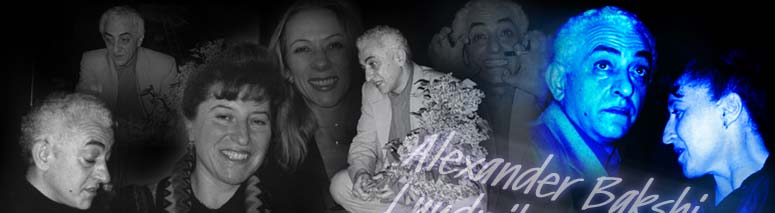
„Cooperation Not Competition: Moscow's Theater Olympics” The New York Times, June 10, 2001 By JOHN FREEDMAN MOSCOW — NO single theme could possibly characterize the huge Third International Theater Olympics now running in Moscow through June 29, although one — unusual collaborations between composers and theater directors — has had special resonance. The Theater Olympics — which originated in 1995 in Delphi, Greece, and continued in Shizuoka, Japan, in 1999 before coming to Moscow this spring — is bigger than ever. Nearly 150 productions from 35 countries as far-flung from Russia's capital as Colombia and Australia are being presented during the 70-day extravaganza. Add to that 25 street theaters, six clown shows and a half- dozen carnivals, including Venice's White and Mexico's Black carnivals. Among the participants are some of the world's top directors: Robert Wilson (United States), Tadashi Suzuki (Japan), Eimuntas Nekrosius (Lithuania), Declan Donnellan (Britain), Krystian Lupa (Poland), Robert Sturua (Georgia) and Bartabas, the French practitioner of equestrian theater. Also present are Russia's own masters: Kama Ginkas, Lev Dodin, Yuri Lyubimov, Anatoly Vasiliev and Piotr Fomenko. For the festival's thundering start on April 21, three drum ensembles took over Theater Square, a stone's throw from the Kremlin. This both preceded and followed a performance of Goldoni's “Arlecchino, Servant of Two Masters,” Giorgio Strehler's legendary 1947 staging for the Piccolo Teatro of Milan. Meanwhile, the festival's obeisance to the past and the memory of Strehler, who died on Christmas Day in 1997, is being countered in the city by the christening of two new theatrical spaces for the future: Valery Fokin's Meyerhold Arts Center and the new principal home of Anatoly Vasiliev's School of Dramatic Art. This stunning space was conceived by the designer Igor Popov as a glass-roofed mix of contemporary architecture, medieval theater and cathedral styles, along with a hint of 20th-century Russian avant-garde. Amid this activity, two pairs of top Moscow composers and stage directors have attracted attention. Aleksandr Bakshi and Mr. Ginkas have created a singular production starring the celebrated violinist Gidon Kremer and entitled “The Polyphony of the World,“ while Vladimir Martynov and Mr. Lyubimov have fashioned “Apocalypse,” a work for boys' and men's choirs that is less than theater but more than a concert. Neither show has firm plans for further performances, although shortly after its premiere, „The Polyphony of the World” received three invitations for tours to Europe. Mr. Martynov, who is 55, has collaborated in the last decade with Mr. Lyubimov's Taganka Theater and Mr. Vasiliev's School of Dramatic Art. At the Taganka, he frequently supplies inventive music for dramatic productions, while at the School of Dramatic Art, he has brought sacred music — in compositions like “The Lament of Jeremiah” — to a secular setting. The world premiere of “Apocalypse” took place in Tallinn, Estonia, at Easter; it was subsequently presented twice in Moscow, at St. Mary's Cathedral on April 28 and 29. Mr. Martynov indicated that the piece, though not a traditional liturgical work, reflects his desire to wed Gregorian chant, Byzantine octaval structures, Renaissance polyphony, the Baroque concerto and Venetian choral traditions. “It is not an eclectic mix,“ he insisted, “but a synthesis.” Moreover, the composer imagined that the piece would incorporate motion. „I tried to convince him to let people stand and sing,” said Mr. Lyubimov, who at the age of 84 is Moscow's dean of theatrical directors. “But he said, `No, I want there to be action.' “ In fact, the theatrical effects were limited. Mr. Lyubimov hung sheepskins behind the altar and spotlights shone through them to create lacy patterns of light. Movement primarily consisted of robed singers strolling in patterns, a visual echo of the swirling music, in which the biblical text, drawn from the Book of Revelation, was often broken into syllables. A critic for the newspaper Kultura wrote of the work's “amazing seamlessness of styles“ and added that, despite recognizable influences, “this music is absolutely new.” Still, „Apocalypse” essentially remained a musical composition with some action grafted onto it. Not so „The Polyphony of the World,” an innovative blend of music and theater with Mr. Kremer and an international cast of 100 musicians, singers, actors, a ballerina, shamans and folklore specialists. This show, which attracted a who's who crowd — including former Russian Prime Minister Yevgeny Primakov, the renowned Georgian composer Gia Kancheli and the prominent novelist Andrei Bitov — and which visibly chafed conservative spectators, wreaked havoc on received notions about music and theater when it was performed on May 18 and 19. As Mr. Ginkas, the director, wrote in the program, “ `Polyphony' is neither concert, opera, ballet nor drama, but it is theater because there is action in it.“ Music does not merely set the tone of “The Polyphony of the World,” the sounds actually determine the content, movement and placement of what the audience witnesses and hears. Mr. Bakshi transforms music itself into a character, into a „plot.” When he composed the sounds of a rock plunking into water, or a hammer driving nails, or 50 feet stomping through the aisles, or 30 choir members rustling cellophane on a balcony behind the audience, it compelled the director to find suitable actions for the sounds. In fact, Mr. Bakshi has created a new form of art that does not fit normal notions of music or theater and for which there does not yet seem to be a vocabulary. Barefoot classical musicians traversed the stage and auditorium, sharing space with a practicing shaman in full regalia of eagle feathers, bells, amulets and mask. Members of Les Percussions de Strasbourg in France played bowls floating upside down in water, cracked a whip and, standing at the back of the auditorium, entered into rhythmic contests with performers playing the duduk, the didjeridu and the conch shell onstage. Siberian throat singers onstage traded volleys with a tenor from the Bolshoi Theater who was situated in an upper balcony behind the audience. Jonathan McClain Sass, a virtuoso tuba player from Harlem who now lives in Vienna, defied the reputation of his unwieldy instrument by playing exquisite trills that fluttered off into silence. Through it all, two actors (Maxim Isayev and Pavel Semchenko), mute and godlike, presided over the birth, life and death of a speechless primal man (Vassilis Laggos). At times they indifferently guided his every move, occasionally chastising him through gestures, but more often retreated to the shadows to watch him fend for himself. The existence of primal man was chiefly determined, like the production itself, by the sounds surrounding him. “I include the blocking in the sounds of my music,” Mr. Bakshi said. «I avoid working with two-dimensional space. Music is usually monodirectional: it originates on stage and moves out to the listener. But I believe there must be a polyphony of voices in music. When space is divided into spheres — over here someone speaks slowly, back there someone plays quickly, while other sounds drift down from above — then you have achieved polyphony in space.» Mr. Bakshi, who is 49, is the proponent of a genre he has been developing for 20 years and that he calls “the theater of sound.“ A hybrid form, it reaches back to the principles of ritual and myth, where the composer substitutes sounds for words and replaces the playwright as the creator of „plot” and motivation for activity on and off the stage. Throughout the 105-minute performance only a handful of words were sung or spoken, some in Russian, some in other languages — English, Greek, Italian. In one segment, a tenor, Nikolai Semionov, repeatedly sang the name variants “Orfei“ and „Orpheus,” referring to the tragic hero, the ostracized, misunderstood artist, played by Mr. Kremer. This enigmatic figure, freely walking about the stage and wearing either a nondescript overcoat or concert tails, communicated with the other musicians exclusively on his 1730 Guarneri and through silent glances. Later, members of Mr. Kremer's own Kremerata Baltica string ensemble conspiratorially whispered three words for “treason” — two in Russian, one in English — while two musicians solemnly carried a double-bass across the stage in a prone position as if it were a coffin bearing a dead hero. “The Polyphony of the World” presents a man who achieves consciousness by interacting with sound. In time, the simple sounds of nature — wind, rain, rock clacking on rock, rock thudding in dirt — are organized into sophisticated forms, some mellifluous, some menacing, as when the pounding, rhythmic strokes of strings engender the percussive clatter of a mob that leads everyone offstage in a fascist march. Mr. Ginkas, who recently celebrated his 60th birthday, is famous for his provocations, and he again was startling in his inventiveness. He provided mirror-images of the gods appearing in flight from on high and the primal man being “born” through a hole ripped in the stage floorboards: the actor was yanked into the air feet first by a rope and pulley. Later, in a scene richly implying the Crucifixion and the straitjacketing of a madman, the gods bound the primal man with white sheets, pulled his arms apart and nailed a book to a slim board attached to his back. All this was played out in a cavernous, primordial earthen setting designed by Sergei Barkhin, where the two godlike figures often set fire to objects, to the earth and even to the air. The effect was achieved by igniting invisible, slow-burning strings hanging from the flies. Some spectators were outraged when the primal man splintered a violin with a rock and hurled the shards into the wings. But this was a visual realization of Mr. Bakshi's belief that the essentially European concept of harmony — sound as order and hierarchy — has waned and is poised to be replaced by polyphony; that is, sound representing equality through diversity. Rehearsals for “The Polyphony of the World” were rumored to be a bloody affair as vastly conflicting visions clashed. But the public witnessed a work of prodigious imagination that should send repercussions through the Russian artistic world for years to come. John Freedman, 10-06-2001 | По-русски News Oksana Mysina Brotherhood Oxy Rocks Forum Boxoffice Links
|
| © 2003—2006, Oksana Mysina Theatrical Brotherhood E-mail: mysina@theatre.ru +7 (495) 998-63-43 (Oksana Ryadnina, Press attashe) |